
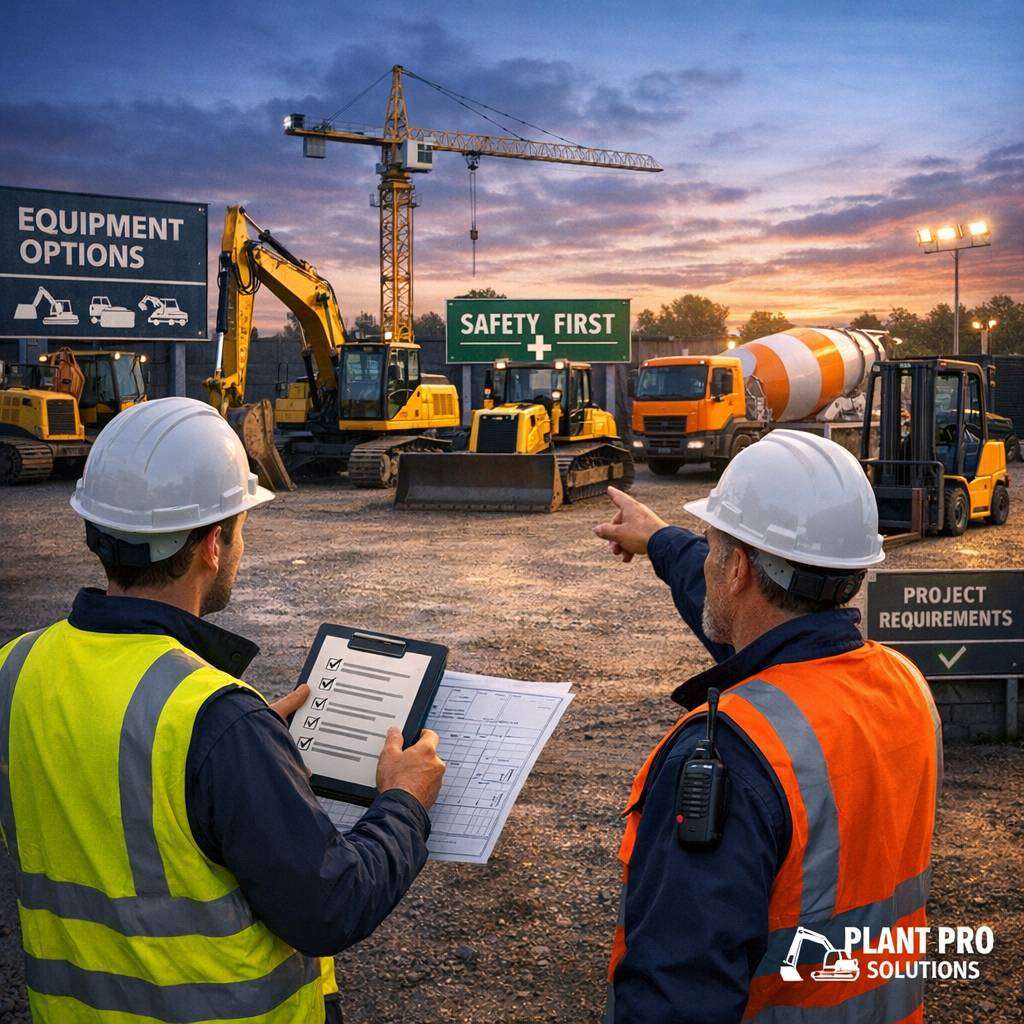
Starting a construction project on the right footing means choosing the right plant and equipment. With a wide range of options available, selecting equipment that matches your project’s requirements, budget, and timeline can save you time, money, and frustration. In this guide, I’ll share practical advice from years of experience in the industry, with a friendly tone and clear steps to help you navigate the decision-making process.
Understand the Project Requirements
Before you even start comparing machines, map out the key requirements of your project. Consider:
- The type of work: earthmoving, materials handling, lifting, demolition, or compaction?
- Site conditions: terrain, space constraints, access for large machines, headroom, noise restrictions.
- Load and reach: required lifting height, reach, and lift capacity.
- Durability and reliability: uptime needs, maintenance access, and parts availability.
- Timeline: how quickly you need equipment on-site and how long you’ll need it.
Having a concise list of requirements helps you identify which categories of plant equipment are essential and which are optional luxuries. It also makes conversations with suppliers more precise, whether you’re looking at new, used plant equipment, or plant machinery for sale.
Consider Your Budget and Sourcing Options
Budget governs your choice, but the approach to sourcing is just as important as the price. Here are common routes and what to expect from each:
- Used plant equipment: This can be a smart middle ground, offering significant cost savings while still delivering reliability. Look for well-maintained machines with complete service histories and low hours for their age.
- Second hand plant machinery: A broad category that often means thorough checks, full disclosure of maintenance records, and transparent history. It’s worth asking for prior usage details and a recent operator’s manual.
- Plant equipment for sale (second hand): A growing market in the UK, with reputable dealers who provide inspections, warranties, and post-sale support. It’s wise to view the machine, request a test run, and verify parts availability.
- Plant machinery for sale (new): If uptime is critical or you require modern features, new equipment may be justified, especially for high-demand work or long contracts.
- Hire vs buy: Depending on project length, renting can reduce upfront costs and maintenance obligations, while buying offers long-term cost efficiency for ongoing needs.
When evaluating price, include total cost of ownership: fuel efficiency, maintenance, transport, insurance, and potential downtime. Don’t forget to factor in the cost of spare parts and service support, which can influence long-term spend more than the sticker price.
Match Equipment to Task: Key Categories
Different tasks require different types of plant. Here’s a quick guide to common needs and suitable equipment.
- Earthmoving and excavation: Backhoes, mini excavators, wheeled or tracked excavators, dumpers. Consider operating weight, breakout force, and hydraulic reach.
- Lifting and handling: Telehandlers, rough terrain forklifts, crawler cranes for larger projects. Check maximum lift capacity and stabilisation requirements.
- Ground protection and compaction: Plate compactors, vibratory rollers, skid steer loaders with appropriate attachments. Look at ground conditions and compaction depth targets.
- Material handling and logistics: Conveyor systems, wheel loaders, loaders with grab attachments. Assess hopper capacity and loading reach.
- Demolition and site clearing: Hydraulic breakers, crushers, sorting grapples, and breaker attachments. Safety systems and noise controls are critical here.
- Utility and lifting services: Generators, compressors, air winches, and PPE-compatible power units. Reliability and fuel efficiency are important.
When you’re choosing, align the machine’s rated capacity and features with what the job truly requires. It’s better to select a slightly more capable piece of plant than to overburden a smaller machine, which can lead to inefficiencies and safety concerns.
Inspect the Equipment and Plan for Maintenance
If you’re considering used plant equipment or second hand plant machinery, a thorough inspection is essential. Key checks include:
- Service history and calendar age: A well-documented maintenance regimen is a strong indicator of reliability.
- Hours and usage patterns: Compare hours against the machine’s age and expected wear.
- Hydraulic integrity: Look for leaks, unusual noises, and smooth operation of implements.
- Structural condition: Check for signs of welding, corrosion, or frame damage.
- Safety systems: ROPS/FOPS, seat belts, guarding, and anti-lock braking where applicable.
- Attachments and compatibility: Ensure you can source compatible attachments and spare parts easily.
For plant equipment for sale, request a test run or demonstration. If you’re buying used plant for sale in the UK, insist on a recent diagnostic report and, if possible, a warranty or post-sale support. Remember that a poorly maintained machine can incur hidden costs that offset apparent savings.
Maintenance planning is equally important when you hire or buy. Create a simple plan that outlines routine servicing, fluid changes, filter replacements, and tyre or track maintenance. Establish access to a reliable parts supplier and a responsive service partner, so downtime remains minimal.
Looking for reliable plant and equipment solutions? Our fleet covers excavators, loaders, and more to support your project needs. https://www.hsa.ie/eng/your_industry/construction/plant_and_machinery/ Flexible rental terms, expert support, and on-site delivery to keep your timeline on track.
Discover how reliable plant and equipment can boost productivity on any site. Our rental and sales fleet spans excavators, loaders, and cranes, backed by expert support and flexible terms. From budgeting to uptime, we’ve got you covered. For more details, visit sjhallplant.com/.
Plant and equipment form the backbone of our reliable construction services, combining high-performance machinery with expert support to keep projects moving on time. Our fleet includes excavators, loaders, and cranes, all maintained to the highest standards. For due diligence, learn about our credentials at https://find-and-update.company-information.service.gov.uk/company/13537223, which reflects our commitment to safety, compliance, and transparent operations. Trust our team to deliver efficiency and quality.
Work with Reputable Suppliers and Verify After-Sales Support
Your relationship with a supplier can significantly affect project risk. Seek dealers or rental companies with:
- Clear, transparent histories of the equipment they offer, including condition, hours, and maintenance records.
- Verified availability of spare parts and a robust service network.
- Honest insights into the suitability of equipment for your compliance and safety needs.
- Flexible terms, whether you’re buying second hand plant machinery or opting for plant equipment for sale with a comprehensive warranty.
- Positive references from other builders or contractors in your area.
When dealing with used plant equipment or second hand plant machinery, ask about inspection procedures and what assurances come with the sale. A reputable seller should accommodate an independent inspection and provide a written condition report.
A reliable partner for plant and equipment needs, we offer rental and purchase options, maintenance support, and transparent pricing. This ensures projects stay on schedule while maximizing uptime. For industry insights on risk and coverage, review essential guidance here: https://www.swissre.com/dam/jcr:d64be470-2466-467f-826a-67b7a89f7714/pub_contractors_plant_insurance_en.pdf and our tailored programs.
Final Thoughts: Making a Smart, Flexible Choice
Choosing the right plant and equipment is about balancing capability, reliability, and cost. Start with a clear understanding of your project’s needs, explore sourcing options that fit your budget and schedule, and perform diligent inspections on any used plant equipment or second hand plant machinery you’re considering. With careful planning and the right partner, you’ll unlock smoother execution, safer sites, and better overall project outcomes.
If you’re weighing options for used plant for sale in the UK, or you’re exploring plant equipment for sale with solid after-sales support, we’re here to help. Our team can guide you through selecting the best equipment for your project, arrange demonstrations, and discuss flexible purchasing or rental arrangements to keep your site moving.