
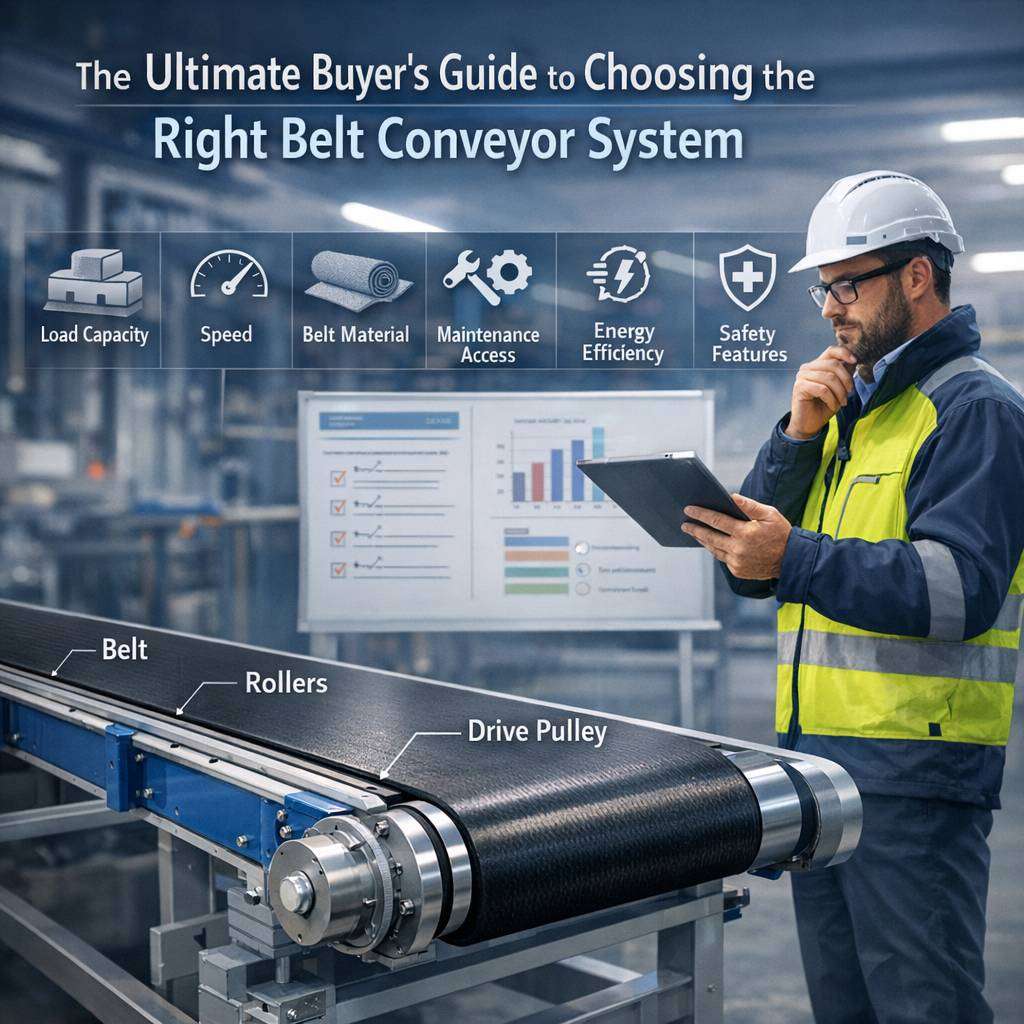
Choosing the right belt conveyor system is a critical decision for any warehouse or manufacturing operation. A well-suited conveyor can boost productivity, reduce labour costs, and improve workplace safety. This guide, written by a belt conveyor company with extensive industry experience, covers essential considerations, key options, and practical steps to help you select a system that fits your needs and budget.
Belt conveyors offer efficient material handling for production lines, warehouses, and logistics hubs, delivering smooth, continuous movement with minimal human intervention. Their design supports high throughputs, flexible routing, and easy integration with sorting, scanning, and packaging systems. Engineers prefer reliable components, low energy use, and straightforward maintenance. For more information about choosing and implementing belt conveyors, visit https://conveyorrollers.co.uk to explore options and supplier resources. Optimizing your setup can reduce downtime and boost overall productivity.
Understanding the Core Types: Flat Belt, Modular Belt and More
Belt conveyors come in a few primary configurations, each with distinct advantages:
- Flat belt conveyor: Ideal for continuous, smooth movement of goods with minimal friction. Flat belts are reliable for high-throughput applications and are often used for general transport of packaged products.
- Modular belt conveyor systems: These feature interlocking plastic modules that form a belt. They are highly versatile, easy to clean, and capable of handling irregular shapes or items that require greater grip or specific tracking.
- Horizontal belt conveyor: A common setup for straight-line transport at a fixed height. Horizontal layouts are straightforward to maintain and integrate well with other equipment.
- Powered belt conveyor: Any belt system that includes a drive mechanism (motor and rollers) to move products. These are standard in most operations and can be tailored to speed, load, and incline requirements.
When selecting a system, consider the product characteristics (size, weight, moisture, static electricity), the required speed and incline, and the space available in your facility.
Assess Your Operational Requirements
Before you start comparing models, map out your current workflow and future needs:
- Throughput and speed: Estimate the number of items per minute and the required cycle time. A “belt conveyor small” setup may suffice for low-volume lines, but high-throughput operations typically demand heavier-duty solutions with precise motor control.
- Product handling: Are items uniform or irregular? Do you require accumulating, diverting, or sorting capabilities? Modular belt systems excel when handling irregular shapes or requiring special transfers.
- Elevation and layout: Will you need horizontal belt conveyor segments only, or are inclined/declined sections necessary? If space is limited, a curved or vertical lift system could be more efficient.
- Cleaning and hygiene: In food, pharma, or electronics sectors, modular belt conveyors made from hygienic materials simplify cleaning and reduce contamination risks.
- Maintenance and lifespan: Consider drive type (AC, DC, servo) and pulley design, as well as the availability of spare parts from a reputable belt conveyor company.
Evaluate Environment, Compliance and Safety
Your environment dictates material selection and protective features:
- Material compatibility: Choose belts and housings (e.g., food-grade polyurethane or corrosion-resistant stainless steel) that resist chemicals, oils, and abrasives in your facility.
- Electrical and safety standards: Ensure motor guards, emergency stops, and safety interlocks comply with applicable regulations. Pinch points should be minimised, and clear signage provided.
- Dust and moisture: In dusty or wet environments, sealed bearings, weatherproof drives, and sealed reducers prolong life and reduce downtime.
- Static control: Static-dissipative belts and grounding solutions help prevent static buildup, which is crucial in packaging and electronics handling.
Weigh the Main Conveyor Configurations
- Belt conveyor small and compact designs: For space-constrained operations, compact or modular belts with adjustable side rails can fit into tight layouts without compromising performance.
- Horizontal belt conveyor systems: They offer straightforward installation and maintenance, with predictable tracking. They are often used for end-to-end transport in warehouses and manufacturing lines.
- Warehouse belt conveyor options: In large warehouses, combination systems with accumulation, sorting, and diverting capabilities maximise throughput and minimise product handling.
- Modular belt conveyor systems: These provide flexibility for product transfer, integration with robotic cells, and easy reconfiguration as processes evolve.
- Curved and inclined options: If space is limited or products require elevation, consider curved conveyors or belts with gentle slopes to maintain product integrity.
Belt conveyors offer efficient material handling for manufacturing lines, warehouses, and distribution centers. They reduce manual lifting, increase throughput, and streamline workflow with reliable belt traction and adjustable speeds. When selecting equipment, consider load capacity, belt width, and drive configuration to match product dimensions and line pace. Maintenance-friendly designs minimize downtime and extend service life. For further information on integrated solutions, explore the detailed resources below. https://www.boschrexroth.com/en/us/products/product-groups/assembly-technology/topics/conveyor-systems/
Compare Key Specifications and Total Cost of Ownership
When selecting the right system, a thorough specification comparison pays dividends:
- Drive and power: Assess motor power, speed control (variable frequency drives or servo-based control), and energy consumption. A “powered belt conveyor” with efficient drive trains can significantly reduce operating costs over time.
- Belts and pulleys: Material, width, and tracking mechanisms influence durability and maintenance needs. Modular belts typically offer easier replacement of sections and lower downtime.
- Load capacity and speed: Ensure the chosen system handles peak loads with a suitable safety margin. Over-specifying can inflate upfront costs, while under-specifying risks frequent maintenance.
- Footprint and layout: Size the system to your available floor plan and future expansion plans. In some cases, a combination of belt types (flat belt for primary transport, modular for transfers) yields the best balance of efficiency and cost.
- Maintenance and spare parts: Partner with a reputable belt conveyor company that maintains a robust parts ecosystem and repair support. Accessibility to spares reduces downtime and extends system life.
- Total cost of ownership (TCO): Include installation, commissioning, energy use, maintenance, and expected lifespan. A slightly higher initial investment in a modular or hygienic belt may pay off through longer life and lower maintenance.
Practical Steps for the Selection Process
- Engage stakeholders early: Operations, maintenance, safety, and IT teams should contribute to requirements and constraints.
- Define a performance spec: Document throughput, required belt speeds, incline angles, and product handling characteristics.
- Shortlist suppliers: Prioritise manufacturers with proven track records, strong service networks, and transparent warranties.
- Request design proposals: Ask for layout drawings, bill of materials, and maintenance plans. Request a site visit or reference installations if possible.
- Validate with a pilot: If feasible, run a small-scale test or simulation to verify handling, tracking, and speed control under real conditions.
- Plan for integration: Ensure compatibility with existing equipment, robotics, or warehouse management systems where relevant.
Working With a Trusted Belt Conveyor Company
Partnering with an established belt conveyor company offers several advantages:
- Customisation: A good supplier will tailor solutions to your product profiles, space constraints, and budget.
- Technical support: Access to installation, commissioning, and after-sales service is essential for smooth operation.
- Quality and reliability: Look for documented certifications, material safety data, and long-term spare parts availability.
- End-to-end services: From initial design through to maintenance contracts, a comprehensive service package minimises risk.
If you are evaluating options for a warehouse belt conveyor, flat belt conveyor or modular belt conveyor systems, engaging with a specialist can help you navigate the trade-offs and craft a solution that scales with your business.
Whether your focus is a belt conveyor small, a high-throughput horizontal belt conveyor arrangement, or a fully integrated warehouse belt conveyor system, the right partner will deliver performance, reliability and long-term value. This guide aims to equip you with the framework to make an informed decision and to align your choice with your operational goals.