
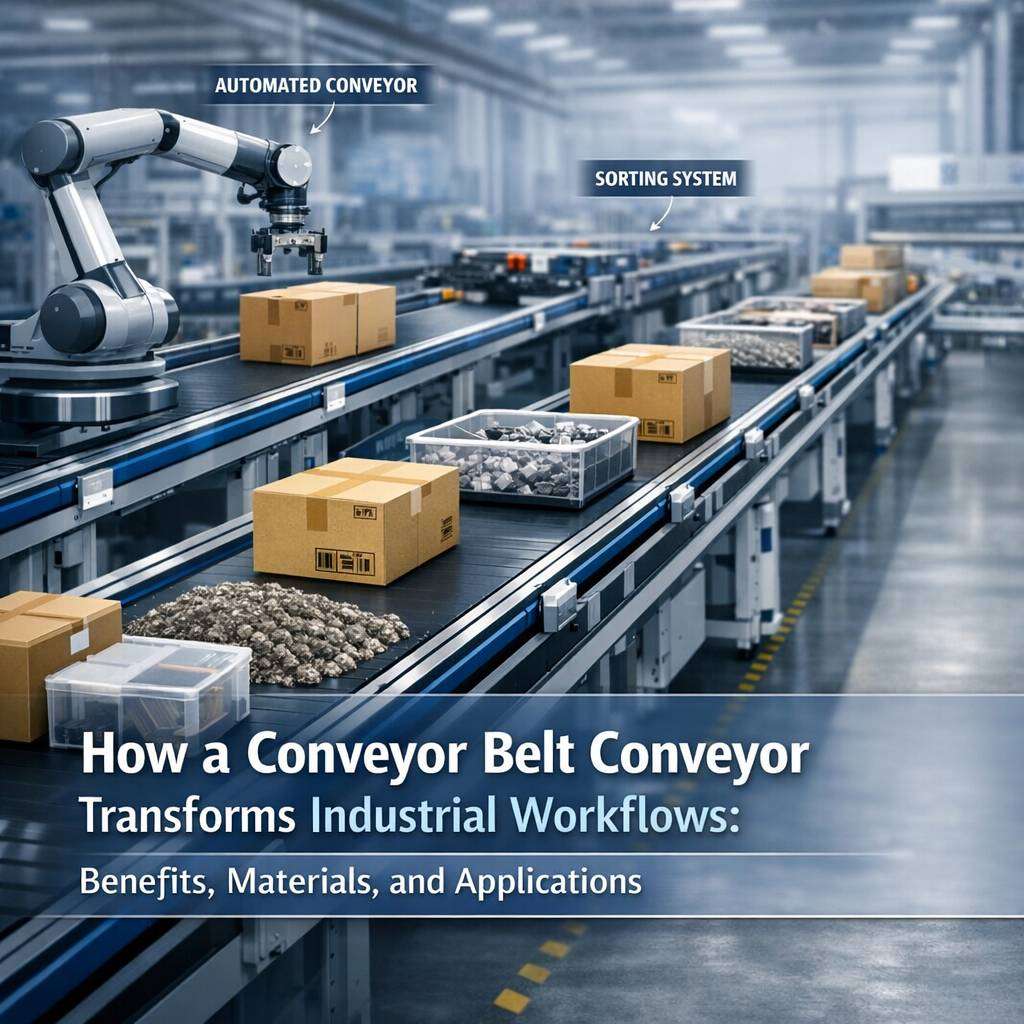
In modern industry, efficiency and reliability are the keystone of productive workflows. A well-designed belt conveyor system can streamline material handling, reduce labour intensity, and improve throughput across a wide range of sectors. This article explores the transformative impact of a conveyor belt conveyor, detailing benefits, materials, and practical applications. It also highlights the roles of belt conveyor manufacturers and suppliers in delivering tailored solutions for specific operations.
Benefits of integrating a belt conveyor system
A belt conveyor system offers several tangible advantages for factories and distribution centres. First, it enables continuous movement of goods with minimal manual intervention, which significantly lowers labour costs and reduces the risk of repetitive strain injuries. Second, the modular nature of many belt conveyor configurations allows for scalable layouts that can grow with production demands. Third, energy efficiency can be enhanced through optimised belt speed, drive arrangement, and idle-time management. Fourth, consistent handling improves product quality by minimising damage during transfer between processes. Finally, maintenance-friendly designs, such as accessible rollers and belt cleaners, contribute to higher uptime and lower lifecycle costs.
When evaluating a belt conveyor, organisations should consider factors such as load capacity, belt width, and the operating environment. In harsh or dusty environments, for example, a rugged belt conveyor with appropriate sealing and cleaning systems ensures reliable performance. For facilities requiring continuous operation, a powered belt conveyor with energy-efficient drives and regenerative braking options may be the best fit.
Materials and design options
Conveyor belts come in a variety of materials, each suited to different applications. Common options include:
- Polymer belts: PU, PVK, and PVC belts offer good chemical and abrasion resistance for light to medium duties. They are widely used in packaging, food, and pharmaceutical handling.
- Rubber belts: Natural and synthetic rubber belts provide flexibility and high impact resistance, commonly employed in bulk handling and heavy-duty applications.
- Teflon-coated (PTFE) belts: For high-temperature or non-stick needs, PTFE-coated belts deliver excellent heat resistance and smooth transfer.
- Metal mesh and chain belts: In high-temperature or sanitary environments, metal mesh or chain belts provide durability and cleansing options. Chain belt conveyors are particularly robust for heavy loads and racking processes.
- specialised belts: Montane or sidewall belts, tracking-enhanced belts, and multi-ply constructions serve niche requirements such as incline transportation, steep angles, or wash-down settings.
In addition to belt material, the conveyor’s drive and support structure influence performance. Horizontal belt conveyors, inclined or declined configurations, and curved sections each demand specific idlers, pulleys, and motor choices. For industries requiring gentle handling, low-friction belts and precision-weighted rollers help prevent product damage. Conversely, rough-duty lines may utilise wider belts, higher-torque motors, and reinforced frames.
A conveyor belt conveyor system streamlines production, improving efficiency and safety across industries. For top-tier components and support, explore reliable options now: https://conveyorrollers.co.uk, offering quality parts, durable belts, rollers, and expert guidance to optimize your line.
Types of belt conveyor systems
There is a spectrum of belt conveyor systems designed to address unique workflow challenges. Notable variants include:
- Horizontal belt conveyor: The standard choice for straight-line transport across production floors. These systems maximise space utilisation and provide straightforward integration with upstream and downstream processes.
- Powered belt conveyor: A broad category that includes driven belts with belt- and roller-based drive systems. They are essential for controlled speed, direction, and load management.
- Belt conveyor with modules: Modular plastic belt systems offer easy reconfiguration for varying layouts, including merge, divert, and accumulation zones.
- Chain belt conveyor: Featuring interlinked chains or chain-driven belts, these conveyors excel in high-load, high-temperature, or wash-down environments and can provide excellent durability where friction is a concern.
- Incline and decline belt conveyors: Elevate or lower products between levels, with belt inclines incorporating cleats or corrugations to prevent rollbacks.
- Conveyor belt conveyor systems with transfer points: Interfaced with robotic pick-and-place or palletising lines to optimise end-of-line throughput.
For many facilities, a belt conveyor company or belt conveyor supplier will recommend a combination of products—a belt conveyor manufacturer can tailor a system to match existing line layouts, material properties, and required throughput.
Applications across industries
The versatility of belt conveyor systems makes them invaluable across sectors such as manufacturing, packaging, agribusiness, mining, and logistics. In manufacturing plants, horizontal belt conveyors integrate with CNC machines, stamping lines, or assembly stations, enabling smooth transfer of components between workstations. In food and beverage, sanitary certified belts and easy-clean designs support hygienic handling of product ranges, while maintaining production speed. In mining and bulk handling, robust chain belt conveyors tolerate heavy loads, abrasive materials, and rugged environments. In distribution centres, powered belt conveyors support high-throughput sorting, buffering, and palletised handling, augmenting the capabilities of automated storage and retrieval systems.
Choosing the right belt conveyor system hinges on several considerations: product characteristics (size, weight, and fragility), required throughput, environmental conditions (temperature, moisture, dust), and available space. A qualified belt conveyor manufacturer will conduct a thorough site assessment, propose suitable belt types, drive configurations, and control strategies, and provide end-to-end support—from initial design through installation and ongoing maintenance.
Conveyor belt conveyor systems optimize material handling across industries, delivering consistent performance and reliability. When choosing a setup, consider load capacity, speed, and durability to match production needs. Efficient integration with controls and safety features minimizes downtime and maintenance costs. A well-designed solution enhances workflow, reduces manual handling, and improves product quality. For detailed options and specifications, explore trusted sources like https://montech.com/us/en/belt-conveyors/, which showcases versatile belt conveyor designs and practical application guidance.
The role of partners: from belt conveyor manufacturer to supplier
Engaging with a reputable belt conveyor company or belt conveyor supplier brings several advantages. First, a dedicated belt conveyor manufacturer can deliver customised designs that align with specific workflows, ensuring seamless integration with existing equipment. Second, experienced suppliers offer robust aftercare, including spare parts provenance, service level agreements, and preventative maintenance plans that can minimise downtime. Third, comprehensive documentation—from electrical schematics to safety risk assessments—supports compliance with industry standards and regulatory frameworks.
When selecting a partner, organisations should consider the breadth of offerings (horizontal belt conveyor variants, curved paths, and modular systems), the quality of components (motors, rollers, and belt materials), and the ability to scale solutions across multiple facilities. A dependable conveyor belt conveyor partner will also provide training for operators and maintenance teams, ensuring long-term performance and safety.
In summary, the adoption of belt conveyor systems transforms industrial workflows by delivering continuous motion, scalable configurations, and adaptable materials handling. By choosing the right mix of belt types, drive arrangements, and support structures—and partnering with a trusted belt conveyor supplier or belt conveyor manufacturer—businesses can unlock substantial gains in throughput, product quality, and organisational efficiency.
FAQ: Conveyor Belt Conveyor
What is a conveyor belt conveyor?
A conveyor belt conveyor is a system that uses a continuous loop of material, typically rubber or PVC, to transport goods from one location to another within a facility. It combines a conveyor belt with rollers or a belt-driven pulley system to move items efficiently.
How does a conveyor belt conveyor differ from a traditional conveyor?
A conveyor belt conveyor specifically relies on a moving belt as the primary transport medium, whereas traditional conveyors may use rollers, chains, or gravity to move items. Belt conveyors are versatile for a wide range of product shapes and sizes and are ideal for horizontal, inclined, or declined transport.
What are the main components of a conveyor belt conveyor?
- Belt: The moving loop that carries items
- Drive pulley and idler pulleys: Provide movement and tension
- Motor and reducer: Provide power and speed control
- Belt tracking components: Ensure the belt runs straight
- Frame and supports: Structural base and support
- Control system: Start/stop, speed control, sensors
What types of products can be transported on a conveyor belt conveyor?
Almost any flat or lightly shaped items, including boxes, totes, cartons, packaged goods, and even some loose bulk materials when specific belt textures and surfaces are used. Proper loading, belt type, and safety considerations are essential for optimum transport.
What are common applications for conveyor belt conveyors?
- Assembly lines and manufacturing
- Warehouse and distribution centers
- Sorting and packing operations
- Food processing with hygienic belt options
- Airports and baggage handling
- Mining and bulk material handling with specialised belts
How do I choose the right conveyor belt for my application?
Consider belt material (rubber, PVC, polyurethane), belt width and length, load weight, speed, incline/decline angles, environment (temperature, chemicals, hygiene), and any regulatory or safety requirements. Consulting with a supplier for a load and duty rating is recommended.
What maintenance is required for a conveyor belt conveyor?
- Regular belt inspection for wear, tears, and alignment
- Tension and tracking adjustments
- Cleaning to remove debris and buildup
- Lubrication of bearings and drive components as specified
- Safety checks on guards, emergency stops, and sensors
How do I prevent belt mistracking?
Ensure proper belt tension, correct alignment of pulleys, installation on a flat and clean surface, and use of tracking guidance components. Periodic monitoring and promptly addressing edge wear can prevent mis-tracking.
Are there safety considerations for using conveyor belt conveyors?
Yes. Use proper guarding, emergency stop devices, lockout/tagout procedures during maintenance, safe loading practices, clear signage, and operator training. Ensure belts and drives have safety interlocks and that pinch points are minimized.
What maintenance-best practices improve uptime?
Implement a preventive maintenance schedule, replace worn components before failure, maintain clean surroundings, monitor belt tension and tracking, and use spare parts inventory for critical components. Regular operator training reduces misuse.
Can a conveyor belt conveyor be customised?
Yes. They can be customised in belt material, width, length, drive arrangement (driven by motor or gearmotor), incline capabilities, segmented or curved layouts, and hygienic or explosion-proof variants for specialised industries.
What is the typical lifespan of a conveyor belt conveyor?
Lifespan varies by usage, load, environment, and maintenance. A well-maintained belt conveyor can last many years, with belts themselves typically rated for thousands to millions of operating hours depending on material and conditions.
How do I calculate the capacity of a conveyor belt conveyor?
Capacity is influenced by belt width, belt speed, and material height. A common calculation uses belt load per hour, considering the cross-section of the material and speed. For precise results, consult the manufacturer’s capacity charts or use a design tool.
Are there energy-efficient options for conveyor belt conveyors?
Yes. Options include high-efficiency motors, variable frequency drives (VFDs) for speed control, regenerative drives, and well-optimized idler and belt design to reduce power consumption.
What accessories or add-ons are available?
- Pushers, diverters, andAccumulation systems
- Loading docking and unloading devices
- Sensors for presence, photoelectric, or weight
- Stoppers, guards, and safety enclosures
- Wash-down or hygienic belt options for food processing
- Belt cleaners and dust management systems
If you’d like, I can tailor this FAQ to a specific industry (e.g., food processing, packaging, or mining) or adjust the tone for a product page.