
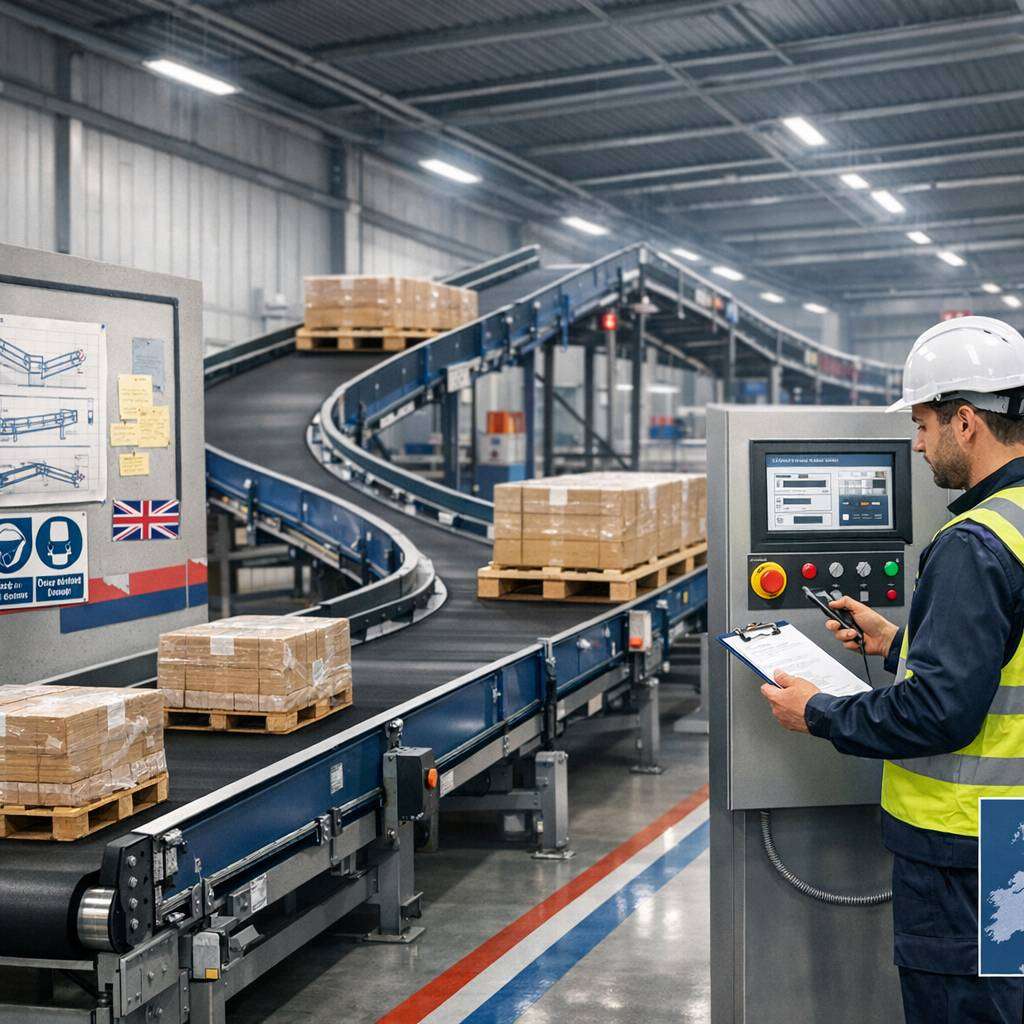
Choosing the right belt conveyor system can feel daunting, but with a clear framework and the right questions, you can shortlist options that fit your operation like a glove. This guide is written for UK businesses looking to optimise material handling, automation, and efficiency. We’ll cover key types, when to choose them, and practical tips for selecting a belt conveyor system that stands the test of time.
Understanding the Basics: What a Belt Conveyor Does
Belt conveyors are designed to move goods from one point to another using a continuous loop of material known as the belt. They are versatile, gentle on products, and scalable for different industries—from food processing to manufacturing and logistics. When you’re evaluating belt conveyors for sale, consider factors such as load capacity, belt material, speed, and drive type. A reliable belt conveyor company will help you tailor a system to your exact throughput and space constraints.
<belt conveyors uk manufacturers and suppliers offer reliable equipment for diverse industries. Explore options at https://www.item24.com/en-us/flat-conveyor-belt-pvc-non-accumulating-240-petrol-blue-70620 to compare features, prices, and delivery times. Optimize material handling with belt conveyors UK compatibility and efficient service.
Major Types of Belt Conveyors
There are several common configurations, each with its own advantages. The choice often hinges on product type, environment, and maintenance considerations.
-
Modular belt conveyor: Made of interlocking plastic modules that can be easily replaced or reconfigured. Ideal for product changes, easy cleaning, and higher resistance to shock loads. They are popular in packaging, food, and pharmaceutical sectors where hygiene and flexibility matter.
-
Roller belt conveyor: Combines rolling elements with a belt, offering low-friction movement and suitability for heavier loads over longer distances. This type works well when product balance is important or when transitions between conveyors and sorters are frequent.
-
Chain driven belt conveyor: Uses a chain to drive the belt in certain zones or under heavier loads. This setup can be advantageous in inclines or situations needing robust drive components and precise positioning.
-
Agricultural belt conveyors: Designed to handle agricultural products like grains, vegetables, or produce. They emphasise gentle handling, cleanability, and durability in dusty or outdoor environments.
Modular belt conveyor: Made of interlocking plastic modules that can be easily replaced or reconfigured. Ideal for product changes, easy cleaning, and higher resistance to shock loads. They are popular in packaging, food, and pharmaceutical sectors where hygiene and flexibility matter.
Roller belt conveyor: Combines rolling elements with a belt, offering low-friction movement and suitability for heavier loads over longer distances. This type works well when product balance is important or when transitions between conveyors and sorters are frequent.
Chain driven belt conveyor: Uses a chain to drive the belt in certain zones or under heavier loads. This setup can be advantageous in inclines or situations needing robust drive components and precise positioning.
Agricultural belt conveyors: Designed to handle agricultural products like grains, vegetables, or produce. They emphasise gentle handling, cleanability, and durability in dusty or outdoor environments.
Each type can be configured as a belt conveyor system with various drive and control options. When reviewing belt conveyors for sale, connect with a belt conveyor company that understands your sector and can recommend the right combination.
Drive, Control, and Hygiene Considerations
The drive mechanism (motor and gearbox) and the control system determine reliability and efficiency. Variable speed drives (VSDs) enable fine-tuned throughput and energy savings, while soft-start functionality reduces mechanical stress. In sectors such as food, pharma, and electronics, hygiene is paramount. Modular belt conveyors with easy-clean designs are often preferred for compliant cleaning regimes and straightforward maintenance.
If you’re dealing with damp or dusty environments, look for sealed bearings and corrosion-resistant materials. In sanitary applications, stainless steel frames and food-grade belt materials are essential. A thoughtful layout that minimises turns, transfers, and pinch points will also improve uptime and safety.
Space and Throughput: Designing for Your Facility
The layout and available footprint significantly influence your choice. Short runs with frequent product changes may benefit from a modular belt conveyor due to its adaptability. Longer, continuous lines might be well served by roller belt conveyors or chain driven belt conveyors, depending on payload and precision requirements.
Consider:
- Throughput goals: hourly or per-shift targets.
- Product dimensions and weight: larger or unstable items may require specific belt materials and surface textures.
- Transfer and sort requirements: curved sections, diverters, and merge points affect complexity and cost.
- Environmental conditions: temperature, moisture, and dust can dictate material choices and protective enclosures.
A well-planned system integrates buffers, powered roller sections, or automated accessories like scanning, weighing, or image-based inspection to keep lines flowing smoothly.
Choosing a Belt Conveyor Company: What to Ask
Partnering with the right supplier is as crucial as selecting the right conveyor. When evaluating belt conveyor companies, ask about:
- Experience in your sector: Agricultural, manufacturing, or food processing? Sector-specific knowledge is invaluable.
- References and case studies: Demonstrates proven performance and reliability.
- After-sales support: Availability of spare parts, service, and rapid response times.
- Customisation options: Ability to adapt standard designs to your exact layout.
- Compliance and safety: Certifications, risk assessments, and training provisions.
- Lead times and installation: Scheduling around production and minimal downtime.
A reputable belt conveyor company will conduct site surveys, offer practical layouts, and provide transparent cost estimates, covering installation, commissioning, and ongoing maintenance.
Looking for reliable belt conveyors in the UK? Our range delivers efficient material handling solutions for warehouses, factories, and shipping hubs. From compact units to heavy-duty systems, you’ll find durable designs that boost throughput and reduce labour. For more details, visit conveyorrollers.co.uk/conveyors/belt-conveyors and explore options and specifications tailored to UK applications.
FAQ: Belt Conveyors UK
What is a belt conveyor and how does it work?
A belt conveyor is a continuous loop of material (the belt) stretched between two or more pulleys that moves product along a belt line. The driving pulley powers the belt, while the idler pulleys maintain tension and alignment. Items placed on the belt are moved from one location to another with minimal manual effort.
What are the common types of belt conveyors available in the UK?
- Troughed belt conveyors
- Flat belt conveyors
- Modular belt conveyors
- Cleated belt conveyors
- PVC or rubber belt conveyors
- Food-grade belt conveyors
- Chemical and wear-resistant belt conveyors
How do I choose the right belt conveyor for my UK operation?
Consider:
- Load type, weight, and dimensions
- Required speed and throughput
- Horizontal vs. inclined or curved routing
- Environment (dust, moisture, temperature)
- Food safety or hygiene requirements
- Maintenance access and space constraints
Are belt conveyors suitable for food and pharmaceutical industries in the UK?
Yes. Many belt conveyors are designed to meet UK and EU food safety standards (e.g., HACCP, EHEDG). For pharma, look for cleanability, materials certified for contact surfaces, and compliance with relevant industry standards.
What materials are commonly used for belt surfaces in the UK?
- PVC and polyurethane (PU) for general and light-duty applications
- Rubber for rugged and heavier loads
- Stainless steel or aluminum frameworks for durability and hygiene
- Food-grade belt materials for sanitary environments
- Specialized materials for high temperatures or chemical resistance
What maintenance is required for belt conveyors?
- Regular inspection of belt wear, tension, and tracking
- Cleaning to prevent buildup that affects performance
- Checking pulleys, rollers, and bearings for wear
- Lubrication where applicable (per manufacturer guidelines)
- Scheduled belt replacement and alignment checks
How do I ensure proper belt tracking?
Ensure pulleys and rollers are aligned, tension is correct, and the belt is centered. Periodic training for operators and using anti-static or grooved pulleys can help reduce drift.
Are there energy-efficient or variable-speed belt conveyors available in the UK?
Yes. Many models offer variable speed drives, regenerative drive options, and energy-efficient motors to match throughput while reducing energy consumption.
What safety features should I look for in a belt conveyor?
- Emergency stop devices and safety interlocks
- Guarding and fencing around moving parts
- Safety switches and conveyors with pinch-point protection
- Clear labeling and operator training
- Safe startup/shutdown procedures and lockout/tagout options
Can belt conveyors be customised for my UK workspace?
Absolutely. Conveyors can be tailored in length, width, incline, curve radius, drive type, and controls to fit space constraints, production lines, and integration with other equipment.
What are the typical installation considerations in the UK?
- Space planning and routing to minimise bends and transfers
- Electrical supply and control integration (BMS/SCADA)
- Compliance with local health and safety regulations
- Certification for food-grade or cleanroom environments if required
- Temporary downtime planning to minimise production impact
How long does a belt conveyor installation typically take?
Installation time varies by complexity, length, and customisation. Simple, modular units can be installed in days; larger, bespoke systems may take weeks, including commissioning and testing.
How do I maintain belt hygiene in cleanroom or food-grade environments?
Choose certified hygienic belt materials, ensure easy cleaning access, minimise crevices, and follow routine sanitation procedures aligned with UK food safety standards.
Where can I source belt conveyors in the UK?
From manufacturers, distributors, and system integrators across the UK. Look for suppliers with UK-based service, parts availability, and references in your industry.
If you’d like, I can tailor these FAQs to a specific audience (e.g., manufacturing, logistics, food processing) or add example questions relevant to your business and target customers in the UK.
Maintenance, Spare Parts, and Longevity
Regular maintenance prolongs life and reduces unexpected downtime. Create a preventive maintenance plan that includes:
- Routine inspections of belts, rollers, and pulleys.
- Tension checks and belt tracking adjustments.
- Cleaning schedules, especially in food and pharma environments.
- Verification of safety devices, guards, and emergency stops.
- Stocking critical spare parts, such as rollers, belts, and drive components.
When possible, choose a modular belt conveyor and other designs with readily available spares to simplify repairs and minimisation of production interruptions.
Practical Tips for a Smooth Investment
- Start with a pilot or proof-of-concept: Implement a single line or a short module to validate performance before full-scale deployment.
- Seek energy efficiency: VSDs and efficient drive systems can reduce operating costs over time.
- Plan for expansion: Design the system with future growth in mind to avoid costly retrofits.
- Compare total cost of ownership: Include purchase price, installation, energy, maintenance, and downtime costs.
- Ensure documentation: Maintain up-to-date manuals, spare parts lists, and service logs for compliance and training.
If you are exploring belt conveyors for sale, request comprehensive specifications, performance data, and commissioning support. A trusted conveyor belt conveyor supplier will be transparent about capabilities and deliver turnkey solutions where possible.
By understanding the core options—modular belt conveyors, roller belt conveyors, and specialised variants like agricultural belt conveyors—and aligning them with your facility’s unique needs, you can select a system that delivers consistent throughput, reliability, and a solid return on investment. Engaging with a knowledgeable belt conveyor company early in the process helps ensure you choose the right configuration, drive, and controls for long-term success.